

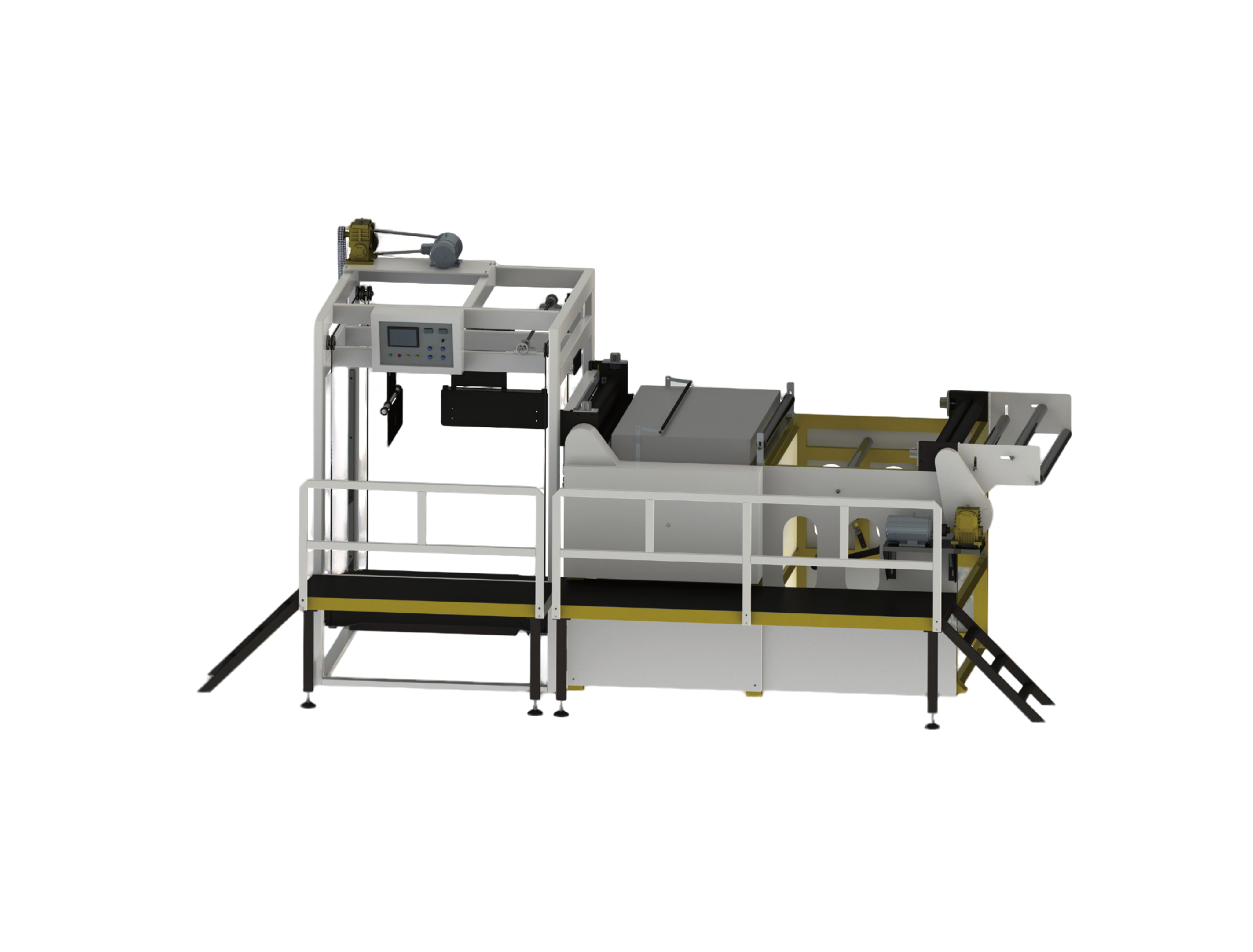
A shaft-less positioning sheeter is a high-precision converting machine designed to deliver accurate, repeatable, and efficient sheet cutting in demanding production environments. In paper converting, packaging, printing, labeling, and related industries, this type of equipment is valued for its ability to handle multiple roll sizes, maintain stable web control, and support fast changeovers without relying on traditional mechanical shafts. However, like any industrial sheeting system, a shaft-less positioning sheeter can experience workflow issues that affect productivity, sheet quality, cut accuracy, operator efficiency, and overall output consistency.
This guide provides a detailed, SEO-friendly overview of the most common workflow issues on a shaft-less positioning sheeter, how to identify them, why they occur, and what general troubleshooting methods are typically used to restore stable operation. It is written for industry reference, blog use, directory pages, and technical content hubs. The information is general and does not recommend any specific company or brand.
A shaft-less positioning sheeter is a roll-to-sheet converting machine that uses independent roll support and servo-based or digitally controlled positioning to feed material into a cutting section. Unlike traditional shaft-driven systems, shaft-less designs are intended to improve flexibility, reduce setup time, and simplify roll handling. The system is commonly used for paper, film, laminate, board, foil, and other web materials requiring precise sheet lengths and repeatable cut registration.
The term positioning sheeter generally refers to a machine that positions the web or roll accurately before cutting, helping ensure the finished sheets meet target dimensions and quality standards. In high-volume converting lines, workflow stability is just as important as cutting accuracy, because bottlenecks, misfeeds, and synchronization problems can reduce throughput and increase waste.
Workflow issues on a shaft-less positioning sheeter can create a chain reaction throughout the production line. Even a minor feed inconsistency can lead to sheet length variation, edge defects, poor stack quality, roll slippage, or downstream packing problems. Since sheeting systems often operate under tight tolerance requirements, diagnosing and correcting problems early is critical for productivity and cost control.
Common workflow interruptions may include:
Before troubleshooting, it helps to understand why this machine type is widely used. The major advantages often associated with a shaft-less positioning sheeter include:
| Advantage | Operational Benefit |
|---|---|
| Independent roll positioning | Faster setup and easier roll handling across multiple roll sizes |
| Servo-controlled accuracy | Improved sheet length consistency and registration control |
| Reduced mechanical complexity | Less dependence on long shaft assemblies and related alignment issues |
| Flexible workflow support | Suitable for changing production formats and frequent job switching |
| Higher efficiency | Potentially faster changeovers and improved line productivity |
| Precision converting | Better performance in applications requiring accurate cutting and stable feed control |
One of the most frequent workflow issues on a shaft-less positioning sheeter is inconsistent sheet length. This can appear as sheets that are slightly too long, too short, or variable from one batch to another. Inconsistent length directly affects downstream packaging, stacking, printing registration, and customer acceptance.
Common causes:
General troubleshooting steps:
Wrinkling is another common issue in shaft-less positioning sheeting operations. Wrinkles can occur when the web is not guided smoothly through the machine, especially during acceleration, deceleration, or material changeovers.
Common causes:
General troubleshooting steps:
Material slippage can disrupt the entire workflow on a shaft-less positioning sheeter. When the web slips at the feed section, cutting accuracy and registration are compromised. Slippage is especially problematic for lightweight papers, slick films, coated materials, and substrates with low friction surfaces.
Common causes:
General troubleshooting steps:
Cutting registration errors occur when the cut position does not match the intended mark, length, or sequence. This is a major issue in positioning sheeting systems because even small registration errors can create significant product inconsistency across long runs.
Common causes:
General troubleshooting steps:
Stable web tension is essential for a shaft-less positioning sheeter. If tension fluctuates, the machine may produce length errors, wrinkles, edge wander, or feed irregularities. Tension instability often appears during acceleration, deceleration, roll depletion, or job transition.
Common causes:
General troubleshooting steps:
Even if cutting quality is acceptable, poor stack formation can disrupt the workflow on a shaft-less positioning sheeter. Sheets may overlap unevenly, shift during collection, or arrive at the delivery section with inconsistent alignment.
Common causes:
General troubleshooting steps:
Frequent stops, alarms, or fault messages can severely reduce throughput on a shaft-less positioning sheeter. These interruptions may be related to sensors, motor drives, safety circuits, control logic, or material feed instability.
Common causes:
General troubleshooting steps:
One of the main reasons users choose a shaft-less positioning sheeter is to improve changeover efficiency. However, if setup procedures are not standardized, the machine may still suffer from long downtime between jobs. This reduces one of the biggest value advantages of the equipment.
Common causes:
General troubleshooting steps:
| Issue | Visible Symptom | Likely Cause | General Action |
|---|---|---|---|
| Inconsistent sheet length | Sheets vary in size | Encoder, tension, or timing error | Recalibrate feed and verify cut position |
| Wrinkling | Web shows folds or creases | Uneven tension or poor roll quality | Check web path, alignment, and tension settings |
| Slippage | Feed inconsistency | Worn rollers or low nip pressure | Clean, inspect, and adjust feed section |
| Registration error | Cut not aligned with mark | Sensor or timing mismatch | Reset sensor position and verify offsets |
| Poor stack formation | Sheets misalign in stack | Delivery timing or static buildup | Adjust delivery speed and static control |
| Frequent stops | Machine alarms repeatedly | Sensor, drive, or safety fault | Review alarms and inspect control system |
| Slow setup | Long job changeover time | Manual settings and poor organization | Standardize setup and save job parameters |
To maintain stable workflow on a shaft-less positioning sheeter, troubleshooting should focus on a few core technical areas. These areas affect nearly every stage of production, from roll loading to final sheet stacking.
The web path should be straight, centered, and free from unnecessary twists or offsets. Misalignment often leads to edge wander, uneven tension, and feeding instability. Roll guides, edge sensors, and roller positioning should be checked regularly.
Tension control is central to precise sheeting. Too much tension may stretch or damage the material; too little tension may cause slippage or wrinkling. Tension settings should always match the substrate characteristics, line speed, and roll diameter.
Sensors are essential in a positioning sheeter for registration, detection, and safety. Dirty lenses, incorrect spacing, vibration, and poor signal quality can all disrupt workflow. Regular inspection and cleaning can prevent many problems.
Since many shaft-less systems rely on servo-based movement, synchronization between drives is critical. If one motion axis lags or responds inconsistently, sheet length and cut timing may suffer. Drive diagnostics can help isolate communication or feedback errors.
Rollers, bearings, belts, guides, and cutting components naturally wear over time. Mechanical wear can create vibration, drag, slippage, and unstable sheet transport. Preventive maintenance is often the best way to reduce workflow disruptions.
The following table shows general specification ranges commonly associated with industrial shaft-less positioning sheeter systems. Actual values vary by application, material type, and machine configuration.
| Specification | Typical Range / Description |
|---|---|
| Material types | Paper, board, film, laminate, foil, coated substrates |
| Control system | Digital or servo-based positioning control |
| Roll handling | Shaft-less independent roll loading and positioning |
| Sheet length | Application-dependent; commonly adjustable across wide ranges |
| Line speed | Variable depending on substrate and cutting requirements |
| Cut accuracy | Designed for high-precision repeatable sheet output |
| Tension control | Automatic or semi-automatic depending on configuration |
| Registration support | Optional or integrated mark detection and synchronization |
| Delivery method | Stacking table, conveyor, or downstream collection system |
| Primary industries | Printing, packaging, paper converting, labeling, industrial finishing |
Preventive maintenance is one of the most effective ways to reduce workflow problems on a shaft-less positioning sheeter. A disciplined maintenance program can help preserve sheet accuracy, reduce waste, and minimize unplanned downtime.
Operators play a central role in maintaining stable workflow. Even advanced shaft-less positioning sheeter systems depend on proper setup, monitoring, and response to changing material behavior. Following consistent operating practices improves both safety and output quality.
To improve visibility in search engines, industry content related to this topic often benefits from natural usage of core terms such as shaft-less positioning sheeter, workflow troubleshooting, sheet cutting accuracy, web tension control, registration error, material slippage, sheeting machine issues, positioning sheeter maintenance, and roll-to-sheet converting.
For best SEO performance, these keywords should appear in headings, body text, image alt text, metadata, and internal links. However, the content should remain readable and useful to human visitors. Search engines increasingly reward technical depth, clear structure, and practical value.
This article is suitable for insertion into the middle section of an HTML page, or for use as the primary body content of a blog post, industry resource page, or product-support knowledge base. It works well for websites focused on converting machinery, industrial sheeting, paper processing, packaging equipment, and manufacturing workflow optimization.
Because the content is general, original in structure, and focused on common troubleshooting themes, it can support ranking goals without referencing any specific brand or vendor. For even stronger page performance, you may pair it with:
Troubleshooting common workflow issues on a shaft-less positioning sheeter requires a clear understanding of web handling, tension control, registration timing, drive synchronization, and mechanical condition. Most problems can be traced to a limited set of causes, including misalignment, slippage, sensor errors, material variation, or setup inconsistency. By using structured inspection, standard operating procedures, and preventive maintenance, manufacturers can improve sheet quality, reduce downtime, and keep the workflow stable across demanding production runs.
In modern converting operations, the shaft-less positioning sheeter remains a valuable solution for precise, flexible, and efficient sheet production. When workflow issues are identified early and corrected systematically, the machine can deliver the productivity and consistency that industrial users expect.
```
Contact: Peter Chen/Jack Chen
Mail : peterchen@yuedamachine.com
Cellphone: +86 18767458866/ +86 19857780001
Address: Building 2, No. 1333 Times Avenue, Longgang City,Wenzhou City, Zhejiang Province China
Copyright © 2026 Wenzhou Yueda Packaging Machinery Co., Ltd. All Rights Reserved.
SitemapThis website uses cookies to ensure you get the best experience on our website.
 Español
 Portugues
 Indonesia
 Tiếng Việt



 Phone
 E-mail
Comment
(0)