

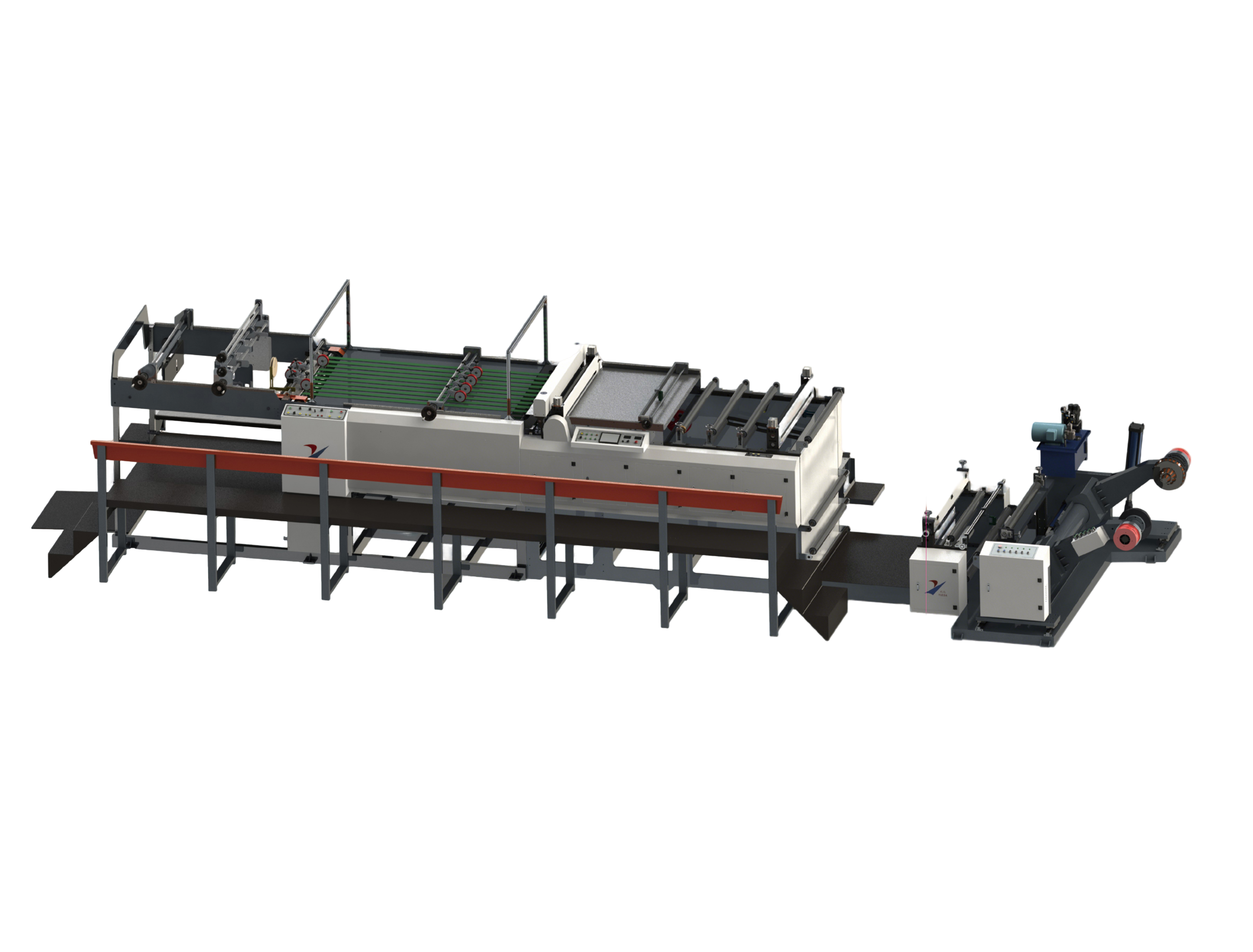
An elevation type transverse cutting machine is a specialized industrial cutting system used to deliver precise, repeatable transverse cuts across a moving or stationary material web. These machines are widely used in converting, packaging, paper, film, textile, nonwoven, rubber, and related production environments where accurate width control, clean cutting, and stable throughput are essential. Because the machine combines elevation movement, transverse cutting action, control systems, drive components, and safety mechanisms, proper maintenance is critical for long-term performance.
This guide provides practical maintenance tips for an elevation type transverse cutting machine, written for industrial operators, maintenance teams, production supervisors, and technical buyers. The content is designed to support SEO performance, improve relevance for search engines, and offer clear, useful information for blog pages, category pages, and industry resource pages. It contains general maintenance guidance only, with no specific company recommendations.
An elevation type transverse cutting machine is a machine that performs crosswise cutting through an elevation-based mechanism. In many industrial setups, the cutting head or blade assembly moves vertically or in a controlled elevated position to make accurate transverse cuts across the material. The machine may integrate servo motors, pneumatic systems, hydraulic systems, linear guides, sensors, tension control devices, and programmable controllers.
The main purpose of the machine is to deliver high-precision cutting without damaging the material, causing burrs, deformation, or inconsistent lengths. In high-volume manufacturing, even small deviations can increase waste, lower product quality, and disrupt downstream processing. That is why regular maintenance of an elevation type transverse cutting machine is not optional; it is a core part of production reliability.
A well-maintained transverse cutting machine provides stable operation, longer service life, lower downtime, and better cut quality. Maintenance directly affects the machine’s ability to maintain alignment, blade sharpness, cutting accuracy, elevation stability, and safe operation. Without scheduled care, the machine may develop problems such as blade wear, guide rail contamination, sensor misalignment, loose fasteners, motor overload, or inconsistent cutting pressure.
In industrial production, maintenance also helps reduce total operating costs. Preventive maintenance is usually far more economical than emergency repair, especially when the machine is part of a continuous line. Because transverse cutting machines often work at high speed and in repetitive cycles, wear accumulates quickly. Routine inspection and cleaning can prevent minor issues from becoming major failures.
| Maintenance Benefit | Operational Impact | Business Value |
|---|---|---|
| Improved cut accuracy | More consistent transverse cuts and reduced deviation | Higher product quality and less scrap |
| Reduced downtime | Fewer unexpected stoppages and fewer emergency repairs | Better production continuity |
| Extended equipment lifespan | Lower wear on mechanical and electrical components | Better return on equipment investment |
| Enhanced safety | Reduced risk of blade failure, jam, or system malfunction | Safer workplace operations |
| Lower operating cost | Reduced waste, fewer replacements, and better energy efficiency | Improved profitability |
Understanding which parts need attention is the foundation of effective maintenance. An elevation type transverse cutting machine typically includes a number of mechanical and control components that must work together precisely. If any one of these parts becomes dirty, worn, misaligned, or damaged, cutting performance can decline.
| Component | Maintenance Focus | Typical Risk If Neglected |
|---|---|---|
| Cutting blade / knife | Sharpness, mounting, damage, wear | Poor cut quality, tearing, overheating |
| Blade holder / cutting head | Alignment, stability, fastening | Inaccurate cuts, vibration, mechanical looseness |
| Linear guides / rails | Lubrication, contamination, wear | Jerky movement, positional error, premature failure |
| Elevation mechanism | Vertical travel, smooth motion, balance | Uneven cutting height, load stress, instability |
| Drive system | Motor condition, belts, couplings, reducers | Power loss, noise, reduced throughput |
| Sensors and encoders | Position accuracy, signal integrity, alignment | Misfeeds, cut length errors, control faults |
| Pneumatic / hydraulic system | Pressure, leakage, seals, filter condition | Weak cutting force, inconsistent operation |
| Electrical cabinet / control panel | Dust, wiring, heat, terminal tightness | Short circuit risk, unstable control, overheating |
| Safety devices | Interlocks, emergency stop, guards | Operator injury risk, compliance issues |
Daily maintenance is the first line of defense against unexpected failures. Before starting production, operators should perform a quick but thorough inspection to identify obvious issues. These checks do not take long, but they can significantly reduce machine downtime and improve operational consistency.
Remove dust, scraps, debris, and offcuts from the machine table, cutting chamber, and surrounding work area. Material residue can interfere with blade movement, contaminate sensors, and create slipping hazards. A clean cutting environment also helps maintain product quality and improves visibility during operation.
A dull or damaged blade is one of the most common causes of poor transverse cutting performance. Inspect the cutting edge for chips, burrs, wear marks, or discoloration. Replace or regrind the blade according to material type and usage intensity. A sharp blade helps reduce drag, heat generation, and deformation.
Vibration during repeated cutting cycles can loosen bolts, brackets, and mounting hardware. Check the tightness of critical fasteners, especially around the blade assembly, elevation mechanism, guide rails, and motor mounts. Loose hardware can affect alignment and create unsafe operating conditions.
Sensors should be clean, properly aligned, and free from obstruction. Even small amounts of dust or film residue can affect detection accuracy. Test position sensors, limit switches, and encoders regularly to ensure the machine responds correctly to feed movement and cut timing.
Unusual sounds such as grinding, knocking, squealing, or rattling often indicate mechanical wear, insufficient lubrication, misalignment, or component interference. Daily observation is useful because experienced operators can detect changes in machine behavior before they become serious problems.
Weekly maintenance should go beyond basic cleaning and inspection. It is a practical interval for checking lubrication points, motion smoothness, and system integrity. Weekly tasks are often enough to catch issues early while minimizing production disruption.
| Weekly Task | Purpose | Result |
|---|---|---|
| Lubricate moving parts | Reduce friction and wear | Smoother motion and longer service life |
| Inspect guide rails | Check alignment and contamination | Improved cutting precision |
| Check blade mounting | Ensure secure installation | Reduced vibration and better safety |
| Test emergency stop function | Confirm safety response | Safer operation |
| Review pneumatic/hydraulic pressure | Ensure proper force output | Stable cut quality |
| Clean control panel exterior | Prevent dust buildup | Lower risk of control issues |
Monthly maintenance should include deeper inspection and performance verification. At this stage, maintenance staff should evaluate the machine’s accuracy, structural stability, and overall operating condition. Monthly checks are especially important in high-speed or continuous production environments.
Measure cut length, edge quality, and consistency across multiple cycles. If the machine produces irregular results, investigate blade wear, feed speed variation, sensor misalignment, or control calibration problems. Cut accuracy is one of the most important performance indicators for a transverse cutting machine.
Check belts, chains, couplings, gears, and rollers for wear, cracks, slack, or contamination. Drive instability can reduce precision and increase mechanical stress. Replacing worn transmission parts in time helps prevent unplanned shutdowns.
Loose wiring, oxidized terminals, dust accumulation, and heat discoloration should be addressed immediately. Electrical inspections are essential for maintaining reliable control and preventing faults. Always ensure the machine is isolated from power before opening electrical enclosures.
If the machine uses centralized lubrication or grease points, verify that lubrication is being delivered correctly. Insufficient lubrication can accelerate wear on linear bearings, slides, and moving joints. Over-lubrication should also be avoided, as it can attract dust and material residue.
The best maintenance programs for elevation type transverse cutting machines are preventive, structured, and data-driven. Rather than waiting for a fault, maintenance teams should create a schedule based on machine usage, material type, production speed, and operating environment. Heavy-duty applications require more frequent inspection than low-volume use.
A strong preventive maintenance strategy should include a detailed logbook of inspections, component replacements, lubrication intervals, and fault history. Over time, these records reveal patterns that help predict future service needs. This approach supports predictive maintenance and helps optimize machine uptime.
Blade maintenance deserves special attention because it directly influences cut quality and machine efficiency. Different materials may require different blade types, edge angles, or replacement intervals. For example, abrasive materials wear blades faster than soft film or paper, while sticky materials may require more frequent cleaning.
A poorly maintained blade can create frayed edges, uneven transverse cuts, excessive force, and thermal damage. It may also overload the drive system and reduce machine lifespan. Keeping blade maintenance consistent is one of the most effective ways to improve the overall performance of a transverse cutting machine.
Lubrication reduces friction between moving parts and supports smooth machine motion. In an elevation type transverse cutting machine, lubrication is usually needed for guide rails, bearings, sliding surfaces, joints, and drive-related components. However, the correct lubricant type and amount must be used.
Too little lubrication causes heat, wear, and stuttering movement. Too much lubrication can attract dust, contaminate product areas, or reduce the effectiveness of seals. Operators should follow the lubrication schedule, use approved grease or oil, and keep lubrication points clean before application.
| Lubrication Point | Common Issue | Recommended Attention |
|---|---|---|
| Linear guides | Friction and contamination | Clean and lubricate on schedule |
| Bearings | Heat and wear | Monitor noise and lubrication condition |
| Sliding tracks | Motion resistance | Use suitable lubricant and remove residue |
| Drive couplings | Mechanical stress | Inspect for looseness and wear |
| Elevation joints | Uneven movement | Maintain proper lubrication film |
Cleaning is often underestimated, yet it is one of the most important maintenance tasks for a transverse cutting machine. Dust, scrap particles, film fragments, fiber debris, and adhesive residue can all affect mechanical movement and sensor performance. Regular cleaning also improves operator safety and reduces contamination risk.
Use appropriate cleaning tools such as soft brushes, lint-free cloths, vacuum systems, and non-corrosive cleaning agents. Avoid harsh chemicals that may damage electrical components, painted surfaces, seals, or plastic parts. For machines used in sensitive applications, cleaning procedures should also consider product hygiene requirements.
Calibration and alignment are essential for achieving consistent transverse cutting accuracy. Even if all components are in good condition, misalignment can cause significant quality problems. Over time, vibration, thermal changes, and wear can alter machine geometry.
Maintenance teams should periodically verify the alignment of blades, guide paths, sensors, feed systems, and elevation mechanisms. Calibration should be checked whenever product dimensions shift, cut quality declines, or major replacement work is completed. Accurate alignment helps maintain exact cut length, straight edges, and repeatable output.
Machine maintenance is not limited to technicians. Operator training plays a major role in equipment reliability. Well-trained operators can identify early warning signs, perform safe startup and shutdown procedures, and avoid misuse that increases wear.
Good operator habits reduce breakdowns and extend the life of the elevation type transverse cutting machine. In many plants, operator awareness is one of the most effective and low-cost maintenance tools available.
| Problem | Possible Cause | Maintenance Action |
|---|---|---|
| Uneven cut length | Sensor error, feed inconsistency, calibration drift | Check alignment, encoder, and control settings |
| Ragged or torn edges | Dull blade, wrong blade type, poor tension | Replace blade and inspect material handling |
| Excessive vibration | Loose parts, worn bearings, imbalance | Tighten fasteners and inspect rotating components |
| Weak cutting force | Low pressure, leakage, drive issue | Check pneumatic/hydraulic system and seals |
| Machine stops unexpectedly | Electrical fault, sensor failure, overheating | Inspect wiring, control panel, and cooling |
| Interval | Main Tasks | Objective |
|---|---|---|
| Daily | Clean machine, inspect blade, check noise, verify safety | Prevent immediate operation issues |
| Weekly | Lubricate parts, test emergency stop, inspect rails | Maintain stable mechanical operation |
| Monthly | Check accuracy, drive parts, electrical connections | Detect developing faults early |
| Quarterly | Deep cleaning, calibration, full system review | Support long-term machine reliability |
| Annually | Comprehensive inspection, major replacement planning | Optimize lifecycle management |
Safety must always come first when servicing an elevation type transverse cutting machine. Cutting systems may involve sharp blades, heavy moving assemblies, electrical power, and pressurized components. Before any maintenance activity, isolate the machine, lock out power sources, and confirm that stored energy has been safely released.
The following table provides a general specification reference for an elevation type transverse cutting machine. Actual values vary depending on machine design, application, production speed, and material type.
| Specification Item | Typical Range / Description |
|---|---|
| Cutting type | Transverse / cross-cutting |
| Elevation mechanism | Vertical or raised cutting head movement |
| Control mode | Manual, semi-automatic, or fully automatic |
| Drive system | Servo, motor-driven, pneumatic, or hydraulic depending on design |
| Material compatibility | Paper, film, textile, nonwoven, rubber, composite, and similar materials |
| Cutting accuracy | Depends on calibration, blade condition, and control precision |
| Speed range | Application-dependent and line-dependent |
| Safety features | Emergency stop, guards, interlocks, alarms, overload protection |
| Maintenance requirement | Routine inspection, lubrication, cleaning, calibration, and replacement of wear parts |
| Typical environment | Industrial production lines and converting workshops |
For businesses publishing industrial content, detailed maintenance pages can perform well in search because they answer practical user intent. Searchers often look for phrases such as transverse cutting machine maintenance, elevation type cutting machine tips, industrial cutting machine care, blade maintenance, and preventive maintenance for cutting machines. A well-structured article with clear headings, tables, and topic depth can improve relevance and user engagement.
Search engines generally value content that is informative, comprehensive, and organized. Including definitions, benefits, maintenance schedules, troubleshooting, specifications, and safety guidance helps a page cover more related keywords naturally. For blog pages and industry landing pages, this makes the content more useful to readers and more discoverable by search engines.
Practical maintenance is essential for keeping an elevation type transverse cutting machine accurate, safe, and productive. By following daily inspection routines, weekly lubrication tasks, monthly performance checks, and long-term preventive maintenance strategies, operators can greatly reduce downtime and improve cut quality. Proper care of the blade, guides, drive components, sensors, and safety systems ensures reliable operation and longer equipment life.
Whether you are building an industrial blog, a category page, or a technical resource page, this topic offers strong SEO potential because it addresses a real operational need. Clear maintenance guidance, structured tables, and keyword-rich explanations create a content asset that is both search-friendly and useful to industry readers.
Contact: Peter Chen/Jack Chen
Mail : peterchen@yuedamachine.com
Cellphone: +86 18767458866/ +86 19857780001
Address: Building 2, No. 1333 Times Avenue, Longgang City,Wenzhou City, Zhejiang Province China
Copyright © 2026 Wenzhou Yueda Packaging Machinery Co., Ltd. All Rights Reserved.
SitemapThis website uses cookies to ensure you get the best experience on our website.
 Español
 Portugues
 Indonesia
 Tiếng Việt



 Phone
 E-mail
Comment
(0)