

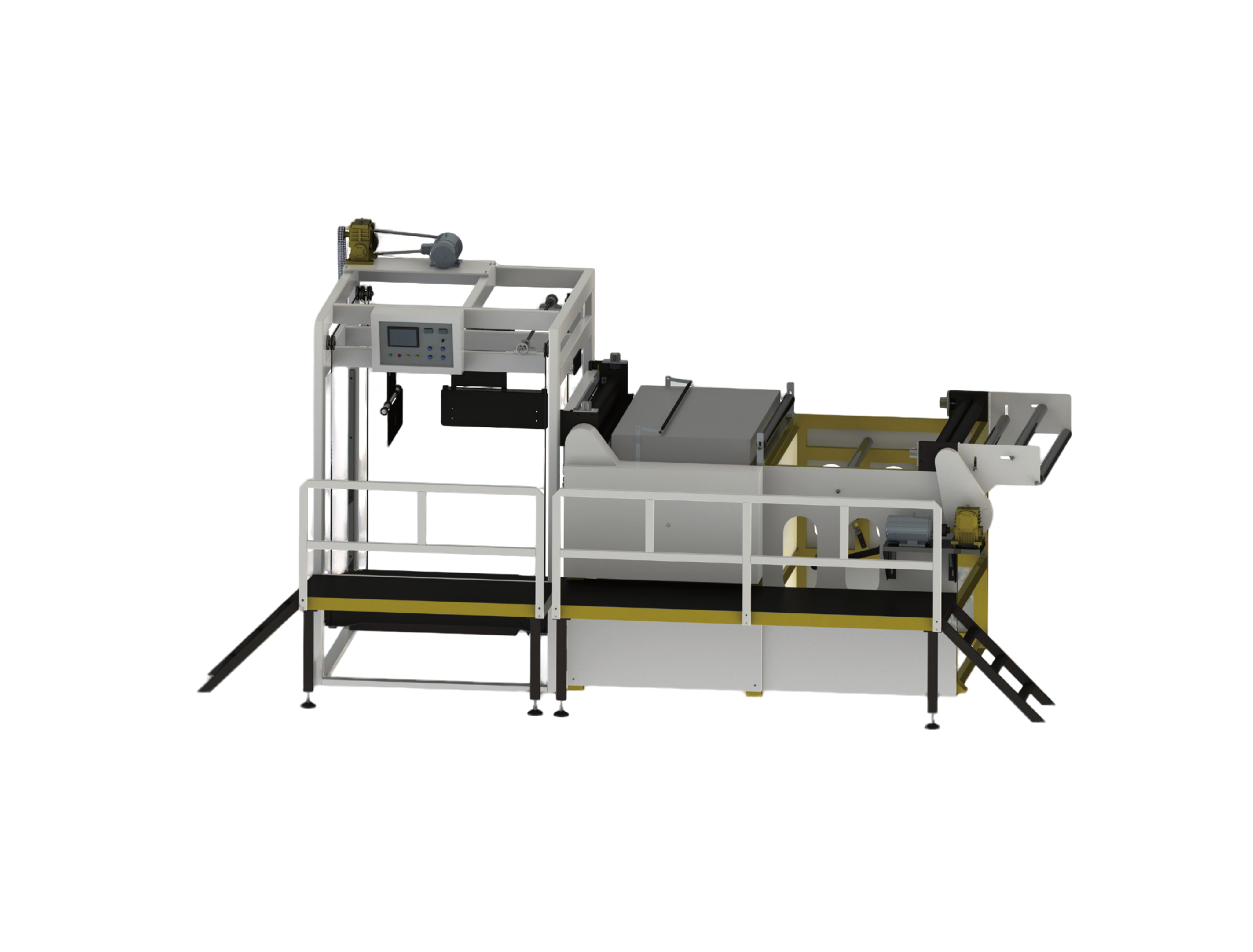
A shaft-less positioning sheeter is a high-precision converting machine designed to cut continuous
rolls of paper, film, foil, board, laminate, or other web materials into accurately sized sheets. Because the system
uses a shaft-less design and advanced positioning control, it is widely used in
packaging, printing, label production, paper converting, and industrial finishing lines where repeatable accuracy
and consistent sheet quality are essential.
This page provides a practical and SEO-friendly operator checklist for a shaft-less positioning sheeter.
It is written for general industry use only and does not recommend any specific brand or company. The goal is to help
operators, supervisors, and maintenance teams improve safety, production stability, sheet accuracy, and machine uptime.
Whether you are building an internal SOP, updating a training guide, or creating an equipment information page,
the following content offers a clear, structured, and search-engine-friendly reference.
A shaft-less positioning sheeter is a sheeting machine that feeds material directly from a roll and
cuts it into pre-set sheet lengths with a positioning system that controls registration, speed, and cutting timing.
Unlike traditional shaft-based systems, a shaft-less configuration can simplify roll handling, reduce mechanical
limitations, and support faster changeovers. The machine is often used for high-volume operations where dimensional
accuracy, clean cutting edges, and synchronized web control are required.
In many converting environments, the shaft-less positioning sheeter is valued for its ability to manage different
roll widths, handle varying material thicknesses, and improve production efficiency. The machine may include unwind
stands, web guiding devices, tension control, servo motors, cutting units, stackers, and digital control panels.
Proper operation depends on consistent inspection, accurate setup, and disciplined checklist execution.
An operator checklist for a shaft-less positioning sheeter helps reduce errors, prevent accidents, and maintain
consistent output. Since sheeting operations involve sharp cutting components, moving rollers, web tension, and
high-speed mechanical motion, small mistakes can quickly lead to waste, downtime, or safety risks.
A structured checklist supports:
To understand the checklist, it helps to know the main functions of the equipment. A typical shaft-less positioning
sheeter performs several connected tasks:
| Function | Purpose | Operator Focus |
|---|---|---|
| Unwind control | Feeds roll material smoothly into the machine | Roll loading, alignment, and web tension |
| Web guiding | Maintains correct material path | Edge position, tracking stability, sensor status |
| Positioning system | Controls sheet length and cut timing | Preset values, calibration, registration accuracy |
| Cutting unit | Severs material into sheets | Blade condition, clearance, sharpness, safety guards |
| Stacking or delivery | Collects finished sheets for downstream handling | Stack quality, jam prevention, sheet alignment |
| Control panel | Allows machine setup and monitoring | Parameter input, alarms, speed control, emergency stop |
Many converters choose a shaft-less positioning sheeter because it can support modern production requirements. The
following are widely recognized advantages in industrial sheeting applications:
The following operator checklist for a shaft-less positioning sheeter is organized into pre-start,
setup, production, quality control, and shutdown stages. This format is suitable for training documents, production
guides, and internal operating procedures.
| Checklist Item | What to Verify | Why It Matters |
|---|---|---|
| Machine area is clear | No tools, pallets, debris, or obstructions around the machine | Prevents trips, jams, and unsafe access |
| Guards are installed | All protective covers and safety guards are in place | Protects operators from moving and cutting parts |
| Emergency stop system | E-stops are accessible and functioning | Allows rapid shutdown during abnormal conditions |
| Lockout/tagout compliance | Maintenance work is complete and machine is safe to run | Prevents accidental startup |
| PPE available | Required gloves, eye protection, and safety footwear are worn | Reduces injury risk during handling and operation |
| Lighting and visibility | Work area is well lit and control indicators are readable | Supports safe operation and inspection |
| Checklist Item | Inspection Point | Recommended Action if Abnormal |
|---|---|---|
| Roll condition | No severe damage, telescoping, or contamination | Replace or recondition the roll before use |
| Web path | Material path is clean and aligned | Adjust guides and remove debris |
| Blades or knives | Edges are sharp, secure, and properly seated | Replace, sharpen, or reset cutting tools |
| Bearings and rollers | No unusual wear, vibration, or noise | Report and inspect before production |
| Sensors | Position, edge, and registration sensors are clean and active | Clean lens surfaces and confirm signal response |
| Control panel | Displays, buttons, and alarms are responsive | Test functions before starting the run |
Material setup strongly affects the performance of a shaft-less positioning sheeter. Incorrect roll loading, tension
mismatch, or poor alignment can cause sheet length variation, edge wandering, and unnecessary waste.
| Checklist Item | Operator Task | Expected Result |
|---|---|---|
| Material specification | Confirm substrate type, caliper, width, and roll direction | Machine parameters match the job requirement |
| Roll loading | Load the roll correctly and secure it in position | Stable feeding without slippage |
| Edge alignment | Align the web with the correct guide line | Accurate tracking through the line |
| Tension setting | Set appropriate web tension for the material | Smooth transport with no stretching or slack |
| Splice or join area | Check splice quality if the run uses joined rolls | Reduced risk of breakage or sudden change in tension |
| Material cleanliness | Ensure the web is free from dust, oil, and damage | Cleaner sheets and fewer cutting defects |
The “positioning” part of a shaft-less positioning sheeter is one of its most important features. Operators should
verify that the length preset, registration marks, servo response, and cut timing are consistent before running at
full speed.
| Checklist Item | Verification Method | Target Outcome |
|---|---|---|
| Sheet length preset | Enter job specification into the control system | Correct output size |
| Registration mark reading | Check sensor detection on printed or marked web | Stable cut timing |
| Servo synchronization | Monitor drive response during test run | Accurate machine coordination |
| Cut timing | Inspect first-sheet and sample-sheet dimensions | Minimal deviation from target length |
| Repeatability | Measure multiple sheets in sequence | Consistent results throughout the run |
| Scale or counter calibration | Compare readouts with physical measurements | Reliable production data |
Before starting full-speed production, operators should conduct a controlled test run. This step helps confirm that
the shaft-less positioning sheeter is cutting correctly and that all downstream handling equipment is functioning.
Continuous monitoring is essential for maintaining the performance of a shaft-less positioning sheeter. Even when the
machine is running normally, operators should watch for early signs of variation.
| Monitoring Point | What to Watch For | Possible Issue |
|---|---|---|
| Web tension | Sudden slack, vibration, or overstretching | Tension instability or feed problem |
| Sheet length | Measurements drifting from target | Positioning or calibration error |
| Cut edge quality | Ragged, torn, or compressed edges | Blade wear or incorrect cutting setup |
| Stack alignment | Sheets misaligned in the delivery pile | Transfer or delivery timing issue |
| Noise and vibration | Unusual mechanical sound or shaking | Loose component or wear condition |
| Alarm status | Unexpected warnings or fault codes | System requires attention or reset |
Quality control is a major reason why companies use a shaft-less positioning sheeter. The objective is not only to
cut material, but to produce sheets that meet dimensional and visual standards.
| Quality Check | Measurement or Observation | Acceptance Focus |
|---|---|---|
| Length accuracy | Measure sample sheets with a calibrated tool | Within job tolerance |
| Width consistency | Verify edges are square and parallel | No visible variation across sheets |
| Cut edge appearance | Look for clean, uniform edges | No tearing, burning, or deformation |
| Flatness | Check for curl, warp, or excessive bending | Suitable for downstream stacking or packing |
| Surface condition | Inspect for marks, dust, or contamination | Maintains end-product appearance |
| Batch consistency | Compare early, middle, and late-run samples | Stable output across the full run |
A proper shutdown sequence helps protect the machine and prepare it for the next production run. It also reduces the
chance of damage caused by leftover material, open settings, or unsecured tooling.
A shaft-less positioning sheeter contains moving parts, rotating sections, and sharp cutting elements. Safety must
remain the top priority at all times. Operators should be trained to follow site-specific procedures and never bypass
protective systems.
Below are common issues seen in sheet cutting environments and the general causes that may be associated with them.
These examples are useful for troubleshooting checklists and operator training materials.
| Problem | General Cause | Typical Operator Response |
|---|---|---|
| Incorrect sheet length | Incorrect preset, sensor mismatch, or calibration drift | Recheck settings and verify measurements |
| Web wandering | Poor alignment, guide issue, or unstable tension | Inspect web path and adjust guiding system |
| Ragged cuts | Dull blade, wrong cutting pressure, or unsuitable speed | Check blade condition and operating parameters |
| Frequent alarms | Sensor obstruction, drive fault, or safety interlock issue | Identify fault code and follow reset procedure |
| Stacking problems | Delivery timing error or misaligned transfer section | Inspect stacking path and sheet release timing |
| Material breakage | Excess tension, damaged roll, or poor material quality | Reduce stress and verify incoming roll condition |
Actual specifications vary by material, application, and machine design. The following table shows common specification
categories used when comparing or describing a shaft-less positioning sheeter in a general industry context.
| Specification Category | Typical Range or Description | Why It Matters |
|---|---|---|
| Material type | Paper, board, film, foil, laminate, and similar webs | Affects tension, cut quality, and feeding behavior |
| Sheet length control | Programmable, depending on production requirements | Determines final sheet size accuracy |
| Web width capability | Varies by machine design and application | Defines compatible roll sizes |
| Production speed | Dependent on substrate, cut format, and line configuration | Impacts output volume and efficiency |
| Control system | Digital HMI, PLC, servo-driven synchronization | Supports precision and automation |
| Cutting method | Rotary, flying, guillotine, or other configured cutting system | Influences edge quality and cycle behavior |
| Tension management | Manual or automatic web tension control | Prevents stretching, slippage, and misfeeds |
| Positioning accuracy | Based on machine calibration and system design | Critical for registration and repeatability |
| Safety features | Emergency stops, interlocks, guards, and alarms | Protects personnel and equipment |
| Application sectors | Packaging, printing, converting, and finishing | Shows where the machine is commonly used |
To get the best results from a shaft-less positioning sheeter, operators should focus on repeatable habits and
disciplined process control. The following best practices are widely applicable in industrial environments:
A strong training program improves safety and consistency. New operators should understand machine structure,
operating sequences, fault response, and quality expectations. Common training topics include:
| Training Topic | Key Learning Outcome |
|---|---|
| Machine overview | Understand the major components and their functions |
| Safety procedures | Learn safe startup, operation, and shutdown behavior |
| Material handling | Load and align rolls correctly |
| Control settings | Input job parameters and monitor machine feedback |
| Quality inspection | Measure output and identify defects early |
| Troubleshooting basics | Recognize common issues and escalate appropriately |
| Recordkeeping | Document runs, alarms, and maintenance notes |
If you are using this content on a blog, directory page, or industry page, the following keyword phrases may help
support search visibility. They are naturally aligned with the topic and can be used in headings, descriptions,
internal links, or supporting copy:
A shaft-less positioning sheeter is a valuable machine for operations that demand accurate sheet
dimensions, stable web handling, and efficient production. A detailed operator checklist for a shaft-less
positioning sheeter helps teams improve safety, reduce waste, maintain quality, and extend equipment life.
By following pre-start inspections, material setup checks, positioning verification, in-process monitoring, and
proper shutdown steps, operators can support more reliable and productive converting operations.
For SEO and industry content purposes, this topic works well in blog posts, equipment guides, FAQ pages, category
pages, and technical overviews. The key is to maintain clear structure, use relevant keyword phrases naturally, and
provide useful information that matches real operator needs.
```
Contact: Peter Chen/Jack Chen
Mail : peterchen@yuedamachine.com
Cellphone: +86 18767458866/ +86 19857780001
Address: Building 2, No. 1333 Times Avenue, Longgang City,Wenzhou City, Zhejiang Province China
Copyright © 2026 Wenzhou Yueda Packaging Machinery Co., Ltd. All Rights Reserved.
SitemapThis website uses cookies to ensure you get the best experience on our website.
 Español
 Portugues
 Indonesia
 Tiếng Việt



 Phone
 E-mail
Comment
(0)