

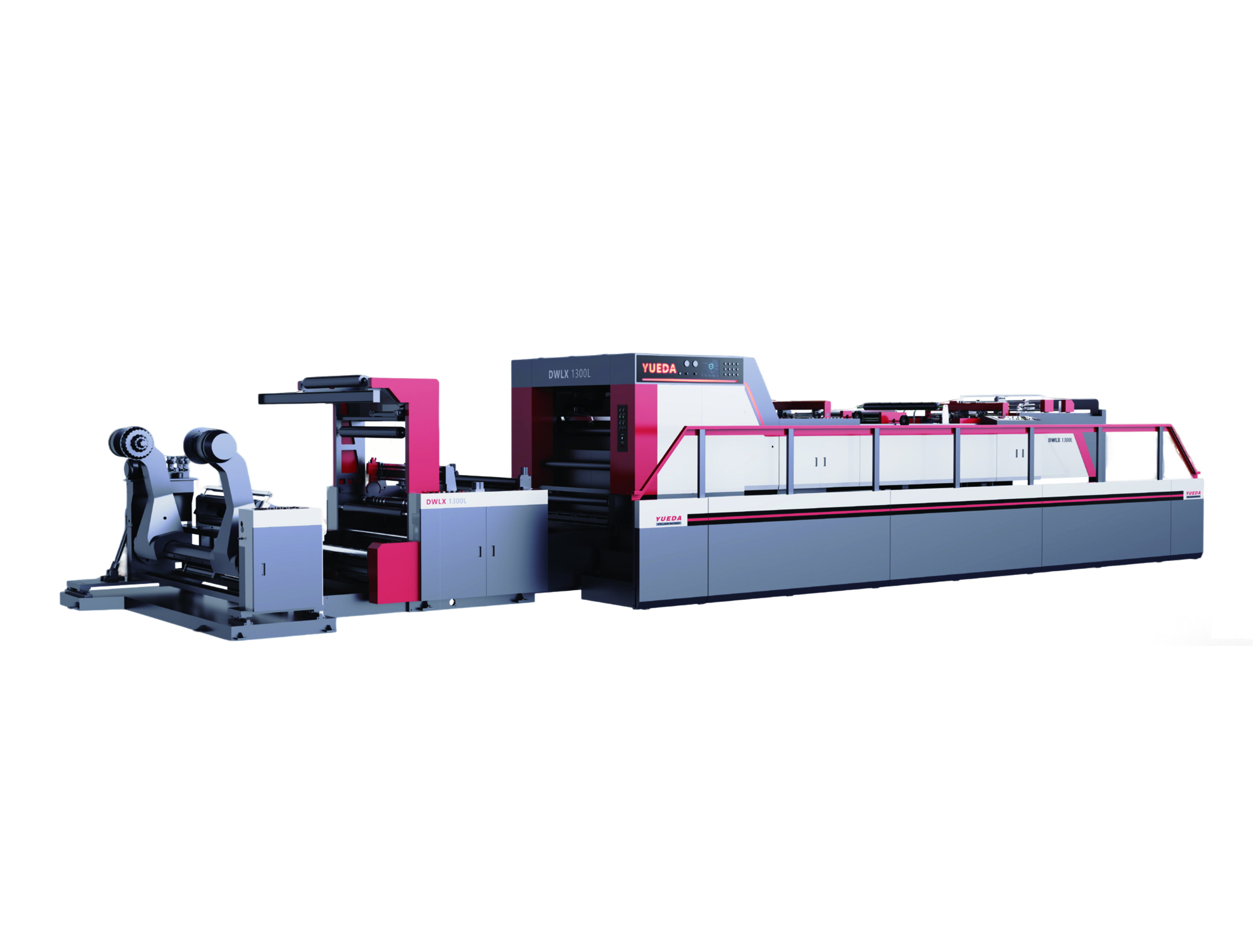
A double rotary sheet cutter machine is widely used in industrial converting, packaging, printing, paper processing, film slitting, and sheet finishing applications. When selecting and operating this type of machine, material considerations play a major role in cut quality, production speed, blade life, waste reduction, and overall operating efficiency. Different materials respond differently to rotary cutting pressure, blade geometry, feed speed, tension control, and surface contact. For this reason, understanding the best material considerations for a double rotary sheet cutter machine is essential for consistent performance and better end-product quality.
This guide provides an SEO-friendly, original, and industry-focused overview of double rotary sheet cutter machine material considerations. It includes definitions, benefits, common material types, technical factors, blade compatibility, specifications, and practical selection guidance. The information below is suitable for use in blog posts, category pages, industry pages, product education sections, and HTML content blocks.
A double rotary sheet cutter machine is a precision cutting system that uses two rotating cylindrical blades or rotary cutting elements to cut continuous web material into sheets. The machine is designed for clean, repeatable, high-speed cutting with minimal deformation. Compared with fixed blade systems, rotary cutting often provides smoother edges, reduced dust, and improved consistency across long production runs.
The “double rotary” design generally means that two rotary cutting components work together in a synchronized motion. This structure helps deliver accurate cutting on a wide range of materials, including paper, cardboard, laminated films, flexible packaging substrates, nonwoven materials, labels, thin plastic films, and some specialty industrial sheets. However, not all materials behave the same way during cutting, which is why material considerations are so important.
Material selection affects almost every part of the cutting process. A material that is too soft may compress under pressure, while a material that is too rigid may resist clean separation. Some materials generate heat, dust, fiber pull, static electricity, or blade wear. Others may slip during feeding or require special tension settings. If the material is not matched correctly to the machine setup, users may experience poor edge quality, inaccurate length, curling, burrs, misfeeds, or unnecessary downtime.
Key reasons material considerations matter include:
Before feeding any material into a double rotary sheet cutter machine, operators and production planners should evaluate several material properties. These properties determine whether the material can be cut cleanly and consistently.
| Material Factor | Why It Matters | Typical Cutting Impact |
|---|---|---|
| Thickness | Affects blade pressure and cutting force | Too thick may require stronger settings; too thin may wrinkle or shift |
| Density | Determines resistance to blade penetration | High-density materials may need sharper blades and tighter alignment |
| Flexibility | Influences feeding stability and cut smoothness | Highly flexible materials may stretch or deform during cutting |
| Surface Finish | Impacts grip, friction, and slip resistance | Glossy surfaces may require better tension control |
| Moisture Content | Can change stiffness and dimensional stability | High moisture may cause curling, swelling, or edge defects |
| Tensile Strength | Determines how the material behaves under tension | Low tensile strength can lead to tearing or elongation |
| Abrasiveness | Directly affects blade wear | Abrasive materials shorten blade life |
| Thermal Sensitivity | Some materials deform under heat and friction | Heat-sensitive materials may melt, shrink, or warp |
Double rotary sheet cutter machines are used across many industries because they can handle a broad range of materials. Below are some of the most common material categories and their typical cutting characteristics.
Paper is one of the most common materials processed on a double rotary sheet cutter machine. It includes coated paper, uncoated paper, kraft paper, specialty paper, and paperboard. Paper is generally easy to cut, but edge quality depends on fiber direction, moisture level, coating type, and thickness.
Material considerations for paper:
Cardboard and lightweight corrugated board require stronger cutting force than plain paper. These materials may be used for packaging inserts, cartons, and folding packaging components. The machine must provide enough pressure and blade durability to avoid crushing the flutes or causing split edges.
Material considerations for cardboard:
Plastic films such as PET, BOPP, PE, PVC, and multilayer laminates are widely used in packaging and converting. These materials are often thin, flexible, and sensitive to heat or static. Cutting film on a double rotary sheet cutter machine requires careful tension control and clean blade surfaces.
Material considerations for plastic films:
Laminated materials combine multiple layers, such as paper and film or film and foil. They may provide barrier properties, strength, or decorative finishes. However, layered structures can be challenging to cut because each layer may behave differently under pressure.
Material considerations for laminates:
Nonwoven fabrics are used in hygiene products, filtration, medical disposables, and industrial wipes. These materials can be soft, fibrous, stretchable, and sometimes elastic. Rotary cutting helps create clean sheet sizes, but fiber pull and edge distortion must be controlled.
Material considerations for nonwovens:
Foil-based and metallized materials are often delicate and prone to wrinkling, tearing, or surface damage. These materials may require a fine cutting setup with excellent alignment and controlled blade pressure.
Material considerations for foil:
Some double rotary sheet cutter machines are used for specialty materials such as insulation sheets, composite layers, synthetic sheets, and technical substrates. These materials may be more rigid, more abrasive, or chemically unique. Material testing is often necessary before full production.
To achieve the best results, operators should understand how different properties influence the cutting process. A material’s behavior is not determined by one factor alone. Instead, thickness, structure, density, and surface conditions all interact during cutting.
| Material Property | Effect on Cutting | Operational Adjustment |
|---|---|---|
| High thickness | Requires greater cutting force | Increase pressure and verify blade strength |
| Low thickness | May wrinkle or shift easily | Reduce tension and improve feed stability |
| High elasticity | Can rebound after cutting | Use precise synchronization and tension control |
| High brittleness | May crack or chip at the edge | Lower impact force and sharpen blade edges |
| High friction | Creates drag and heat | Improve blade finish and lubrication strategy if applicable |
| High abrasiveness | Accelerates blade wear | Increase inspection frequency and blade replacement planning |
Blade selection is one of the most important material considerations for a double rotary sheet cutter machine. The right blade geometry, hardness, angle, and surface treatment should match the material being processed. A blade that works well for paper may not be ideal for plastic film or laminated sheets.
Important blade-related material factors include:
The best blade setup depends on the material’s thickness, density, and cutting resistance. For example, paperboard may need stronger mechanical support, while delicate film may require ultra-sharp blades with minimal friction. Regular blade inspection is also necessary because worn blades can damage product quality and reduce machine efficiency.
Different industries have different requirements for edge quality. Some materials must have perfectly smooth edges for further processing, while others may allow minor irregularities. For example, packaging, label production, medical disposables, and printing applications often demand a clean finish with minimal dust, burrs, or fraying.
Common edge defects caused by poor material matching:
When the material is properly matched to the machine, the benefits can be significant. The double rotary design offers efficient and accurate cutting for many material categories.
| Advantage | Description | Material Benefit |
|---|---|---|
| High speed operation | Supports fast production cycles | Ideal for high-volume paper, film, and packaging sheets |
| Clean cutting action | Rotary motion reduces tearing and crushing | Improves edge quality on delicate and layered materials |
| Repeatable accuracy | Produces consistent sheet dimensions | Useful for products requiring uniform size and finish |
| Reduced dust generation | Cleaner cutting can limit particles | Important for printing, packaging, and hygiene applications |
| Lower vibration | Stable rotary motion improves control | Better handling of fragile or tension-sensitive materials |
| Versatility | Can process multiple substrate types | Supports multi-material production environments |
When selecting a double rotary sheet cutter machine for specific materials, several technical specifications should be checked. These help ensure that the machine can handle the target substrate consistently and safely.
| Specification | Why It Matters | Typical Consideration |
|---|---|---|
| Cutting width | Determines maximum material size | Must match roll or web width requirements |
| Cutting length range | Defines sheet output flexibility | Important for multiple product sizes |
| Material thickness capacity | Limits what substrates can be processed | Critical for paperboard, laminates, and film stacks |
| Feed speed | Impacts throughput and edge quality | May need adjustment for fragile materials |
| Cutting precision | Ensures dimensional accuracy | Important for print-ready and packaging sheets |
| Blade hardness and type | Must fit the material’s wear characteristics | Higher hardness is often needed for abrasive substrates |
| Tension control system | Prevents slippage and stretching | Essential for film, nonwoven, and laminated materials |
| Static control | Reduces sticking and handling problems | Useful for plastic films and lightweight substrates |
Material handling is just as important as machine configuration. Even a well-designed double rotary sheet cutter machine may produce poor results if the substrate is not prepared and guided correctly.
Different substrates can create different operating issues. Identifying these issues early helps improve machine performance and reduce waste.
| Challenge | Likely Cause | Possible Solution |
|---|---|---|
| Edge fraying | Worn blade or fibrous material | Sharpen or replace blade; reduce feed issues |
| Wrinkling | Improper tension or uneven feed | Balance web tension and improve alignment |
| Melting | Heat-sensitive film and excessive friction | Lower speed and improve blade sharpness |
| Delamination | Poorly bonded layered material | Test material quality and reduce cutting stress |
| Dust accumulation | Abrasive or dry substrate | Improve cleaning frequency and blade maintenance |
| Inconsistent sheet length | Feed instability or slip | Optimize rollers, tension, and synchronization |
Choosing the right material setup for a double rotary sheet cutter machine involves testing, measurement, and process optimization. Production teams should consider the following steps:
The double rotary sheet cutter machine is used across multiple industries where material consistency and cut accuracy are essential.
In modern converting and sheet processing operations, material considerations for using a double rotary sheet cutter machine are critical for achieving stable production and high-quality results. The best performance comes from matching material thickness, density, flexibility, surface finish, and thermal behavior with the correct blade design, pressure settings, and feed speed. By understanding how each substrate behaves, manufacturers can improve cutting accuracy, reduce waste, extend blade life, and support efficient industrial production.
Whether processing paper, cardboard, plastic film, laminated material, nonwoven fabric, foil, or specialty sheet materials, the double rotary sheet cutter machine provides a flexible and efficient solution when configured properly. Careful material evaluation, routine testing, and consistent maintenance are essential for reliable results and long-term operational success.
| Material Type | Cutting Difficulty | Main Considerations | Typical Best Practice |
|---|---|---|---|
| Paper | Low to medium | Moisture, coating, fiber direction | Use sharp blades and stable feed control |
| Paperboard | Medium | Thickness, rigidity, pressure control | Increase cutting force carefully |
| Cardboard | Medium to high | Compression resistance, edge stability | Maintain strong blade alignment |
| Plastic film | Medium | Static, heat sensitivity, tension | Minimize friction and overheating |
| Laminates | High | Layer bonding, delamination risk | Test settings before production |
| Nonwoven | Medium to high | Stretching, fiber pull, softness | Use stable feed and sharp cutting edges |
| Foil | High | Wrinkling, tearing, surface damage | Apply precise tension and low vibration |
| Specialty sheets | Varies | Material-specific testing | Perform pilot trials and adjust parameters |
Conclusion: The right material considerations can make a major difference in the performance of a double rotary sheet cutter machine. By aligning substrate characteristics with machine settings, blade choices, and handling practices, manufacturers can achieve better cut quality, higher productivity, and more reliable output across a wide range of industrial applications.
Contact: Peter Chen/Jack Chen
Mail : peterchen@yuedamachine.com
Cellphone: +86 18767458866/ +86 19857780001
Address: Building 2, No. 1333 Times Avenue, Longgang City,Wenzhou City, Zhejiang Province China
Copyright © 2026 Wenzhou Yueda Packaging Machinery Co., Ltd. All Rights Reserved.
SitemapThis website uses cookies to ensure you get the best experience on our website.
 Español
 Portugues
 Indonesia
 Tiếng Việt



 Phone
 E-mail
Comment
(0)