

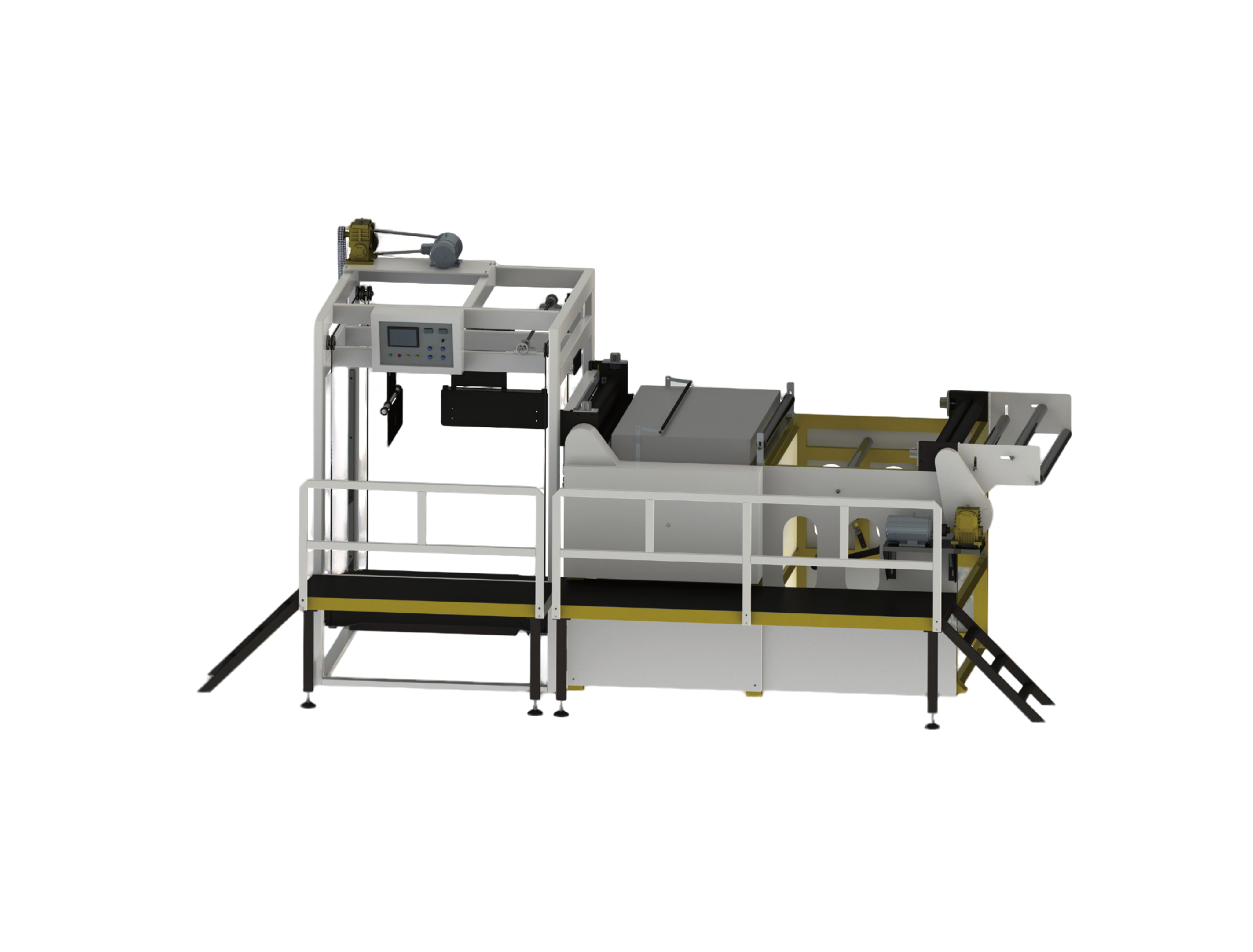
An elevation type transverse cutting machine is a specialized industrial cutting solution designed for
precise crosswise cutting operations in manufacturing, processing, and converting workflows. When comparing different
models, buyers and engineers must evaluate more than just the cutting result. Important factors such as cutting accuracy,
elevation mechanism, material compatibility, safety performance, automation level, blade configuration, maintenance cost,
and production efficiency all influence the long-term value of the machine.
This guide explains the most important key factors when comparing an elevation type transverse cutting machine.
It is written for industrial buyers, technical teams, procurement departments, factory managers, and SEO-oriented industry
pages that need original, keyword-rich, and structured content. The information below focuses on general industry knowledge,
core definitions, advantages, technical specifications, and comparison criteria without mentioning any specific brand or
company.
An elevation type transverse cutting machine is a machine used to cut materials across their width or transverse direction,
often with a lifting or elevation-based design that helps position the cutting unit, worktable, or material path. The
elevation structure improves feeding flexibility, supports different material thicknesses, and may enhance alignment accuracy
during the cutting process.
In many production environments, this type of machine is used for sheet materials, flexible materials, rolls, panels,
laminates, films, paper, textiles, foam, plastic sheets, composite materials, and other industrial substrates. The exact
application depends on blade type, drive system, control system, and the level of automation built into the machine.
In simple terms, the elevation type transverse cutting machine is valued for stable operation, controlled movement, and
efficient cross-cutting performance in repetitive production settings.
Choosing the right transverse cutting machine directly affects product quality, output speed, labor requirements, and
maintenance costs. A poor comparison may lead to inaccurate cuts, excessive waste, frequent downtime, or unsafe operation.
A careful evaluation helps ensure the machine matches your material type, line speed, quality expectations, and factory
workflow.
Since elevation type transverse cutting machines can vary widely in structure and performance, buyers should compare them
using clear technical and operational standards. The best choice is not always the machine with the highest speed or the
lowest price. Instead, the best machine is the one that offers the right balance of precision, durability, efficiency, and
total cost of ownership.
Before comparing models, it is useful to understand the common advantages of this machine type. These benefits are often the
reason manufacturers choose elevation-based transverse cutting systems in the first place.
Below are the most important factors to evaluate when comparing machines. These criteria can be used in procurement
checklists, product pages, factory evaluations, and technical comparisons.
Cutting accuracy is one of the most important performance indicators for any transverse cutting machine. It refers to the
machine’s ability to cut at the exact target position with minimal deviation. Repeatability describes whether the machine
can maintain the same accuracy over many cycles.
When comparing machines, ask whether the cut length, angle, and edge position remain stable under continuous operation. A
machine with excellent repeatability reduces rejection rates, improves product consistency, and supports higher quality
standards.
The elevation mechanism is a defining feature of this machine type. Some machines use manual elevation, while others use
electric, hydraulic, or servo-driven lifting systems. The design influences ease of adjustment, stability, and operator
convenience.
A well-designed elevation system should move smoothly, lock securely, and support the intended load without vibration or
uneven movement. In industrial use, the quality of the elevation structure can directly affect cutting precision and
machine reliability.
Different machines are designed for different material types. Before comparing, identify the material characteristics of
your production line, including thickness, hardness, flexibility, surface sensitivity, and width.
The following table shows common material categories and comparison considerations:
| Material Type | Typical Use | Important Comparison Point |
|---|---|---|
| Paper and cardboard | Packaging, printing, converting | Clean edge quality and high-speed consistency |
| Plastic film | Packaging, laminating, industrial wrapping | Anti-wrinkle handling and tension control |
| Textile and fabric | Garment, upholstery, technical textiles | Fray reduction and smooth feeding |
| Foam and sponge | Insulation, cushioning, upholstery | Blade sharpness and thickness adaptation |
| Composite sheet | Industrial panels and structural products | Cutting force, rigidity, and wear resistance |
| Rubber and elastomer materials | Industrial seals, pads, and sheets | Pressure control and durable blade selection |
Speed is a major comparison factor, especially in high-volume manufacturing. However, maximum speed alone should not be the
deciding factor. A machine that cuts quickly but sacrifices precision or stability may create more waste than value.
Compare the actual production throughput, not just the theoretical speed rating. Throughput should include loading time,
positioning time, cutting cycle time, discharge time, and any necessary adjustment time. The best machine is one that
sustains efficient output without compromising quality.
The blade system plays a central role in cut quality, maintenance frequency, and compatibility with different materials.
Some machines use rotary blades, straight blades, circular blades, or special custom cutting tools depending on the
application.
When comparing blades, consider the following:
A high-quality blade system reduces downtime and helps maintain consistent cross-cutting performance.
Modern elevation type transverse cutting machines may include PLC control, touchscreen interfaces, servo systems, sensors,
and programmable cutting parameters. Automation improves precision, reduces operator error, and supports faster changeover.
A more advanced control system can make the machine easier to use, especially in factories with multiple product sizes or
frequent production changes. Key control features to compare include:
Safety is essential in any industrial cutting system. Because transverse cutting machines involve moving parts, sharp blades,
and material feeding systems, proper safety design is critical. Machines should protect operators while maintaining efficient
productivity.
Important safety features may include emergency stop buttons, safety covers, interlocks, overload protection, sensor-based
shutdown, and clear operating indicators. When comparing options, look for machines that support both operator safety and
easy maintenance access.
A rigid frame improves cutting accuracy by reducing vibration and mechanical deformation. Structural strength becomes even
more important in high-speed or heavy-duty applications. If the frame is weak, the cutting unit may lose alignment over time.
Compare frame materials, welding quality, machining precision, and overall mechanical layout. A robust frame also tends to
extend machine service life and reduce long-term maintenance issues.
Material feeding is another major factor in transverse cutting performance. A machine may be equipped with rollers, belts,
clamps, conveyors, guides, or synchronized feed mechanisms. The goal is to move material smoothly and accurately into the
cutting zone.
Poor feeding can cause misalignment, skewing, wrinkling, or uneven cutting. Compare how well the machine handles material
tension, width, thickness variation, and surface sensitivity.
A machine should be efficient not only in output, but also in daily use. An easy-to-operate transverse cutting machine can
reduce operator training time, prevent setup mistakes, and improve overall workflow.
Consider whether the machine has intuitive controls, clear display logic, automatic positioning, and simple adjustment
procedures. In many factories, a user-friendly machine creates stronger productivity gains than a technically complex but
difficult-to-run system.
Maintenance is a major factor in total ownership cost. A machine that is easy to maintain can save time, reduce downtime,
and improve long-term reliability. Buyers should compare lubrication needs, blade replacement procedures, access to
components, wear part availability, and service intervals.
A practical maintenance design should allow operators to clean, inspect, and replace parts without excessive disassembly.
Machines with standardized parts and clear maintenance schedules are often easier to support over time.
Energy consumption is increasingly important in industrial equipment selection. Efficient motors, optimized drives, and
smart control systems can reduce operating costs. When comparing machines, look at not only power rating but also real
energy use during production.
Energy-efficient equipment may also reduce heat generation and improve long-term mechanical performance. Over time, these
savings can contribute significantly to the overall return on investment.
Factory space is often limited, so the physical footprint of the machine matters. Elevation type transverse cutting machines
can vary in length, width, height, and service clearance requirements. Compare the installation space, feeding direction,
operator access, and maintenance space.
A compact design may be ideal for smaller workshops, while larger systems may be better for continuous production lines with
greater throughput.
Noise and vibration affect both working conditions and machine performance. Excessive vibration can reduce cutting accuracy,
increase wear, and create operator discomfort. Lower noise levels often reflect better mechanical design and smoother
motion control.
Compare the machine’s vibration control measures, bearing quality, drive alignment, and structural damping characteristics.
In some industries, low-noise equipment may also help meet workplace safety and compliance requirements.
Many production environments require custom machine configuration. The best machine may depend on adjustable cutting width,
blade arrangement, feed length, control logic, or special material support features.
Common customization options include:
Comparing available configuration options is especially important when the machine must fit into an existing production line.
The following table provides a general specification framework that can be used when comparing elevation type transverse
cutting machines. Actual values vary by machine model and application.
| Specification Item | Common Comparison Range | Why It Matters |
|---|---|---|
| Cutting width | Depends on application and line design | Must match material size and production format |
| Cutting length accuracy | High precision systems offer tighter tolerance | Directly affects finished product quality |
| Elevation range | Manual, electric, hydraulic, or servo-based | Influences flexibility and setup convenience |
| Max material thickness | Light-duty to heavy-duty options available | Determines usable material range |
| Cutting speed | Varies by material and control system | Affects output rate and line productivity |
| Blade type | Rotary, straight, circular, or custom | Impacts edge quality and maintenance |
| Control method | Manual, semi-automatic, fully automatic | Determines ease of use and precision |
| Drive system | Motor, servo, hydraulic, or mixed drive | Influences stability and responsiveness |
| Power supply | Depends on regional industrial standards | Must match factory electrical conditions |
| Machine footprint | Compact to large-scale configurations | Affects installation and workflow layout |
| Maintenance interval | Depends on usage intensity and design | Impacts downtime and service planning |
| Safety system | Emergency stop, guards, sensors, interlocks | Protects operators and equipment |
Use the following checklist when evaluating an elevation type transverse cutting machine:
Many buyers focus only on the purchase price, but the true value of a transverse cutting machine depends on total cost of
ownership. This includes installation cost, operator training, power use, spare parts, maintenance labor, downtime risk,
and service life.
A lower-priced machine may cost more in the long run if it requires frequent repairs or creates material waste. By contrast,
a well-built machine with stable performance may offer better return on investment through higher output and lower scrap
rates.
This machine type is widely used across several industrial sectors. Typical industries include packaging, printing,
converting, textiles, foam processing, laminating, plastics, composite manufacturing, insulation materials, and general
sheet processing.
Because the machine supports precise crosswise cutting, it is useful anywhere consistent width-wise sectioning is required
in a controlled production line.
To choose the right machine, define your production goals first. Consider daily output targets, material dimensions,
tolerance requirements, labor availability, and future expansion plans. Then compare machines using consistent criteria
rather than subjective impressions.
It is also helpful to request performance data, sample cutting results, maintenance documentation, and control system
details. A structured comparison process improves decision quality and reduces the risk of selecting an unsuitable model.
When comparing an elevation type transverse cutting machine, the most important factors include cutting accuracy,
elevation mechanism quality, material compatibility, blade system design, automation level, safety features, maintenance
requirements, energy efficiency, and total operating cost. By evaluating these criteria carefully, industrial buyers can
select a machine that delivers stable performance, reliable output, and long-term value.
For SEO purposes, this topic is highly relevant to industrial equipment, transverse cutting machine comparison, elevation
type cutting systems, material processing machinery, and precision cutting solutions. A well-structured page with clear
headings, keyword-rich paragraphs, and comparison tables can improve search visibility and help users quickly understand the
advantages and selection criteria of this machine type.
Whether you are building a blog post, category page, product guide, or industry information page, this content provides a
strong foundation for original, searchable, and user-friendly HTML insertion.
```
Contact: Peter Chen/Jack Chen
Mail : peterchen@yuedamachine.com
Cellphone: +86 18767458866/ +86 19857780001
Address: Building 2, No. 1333 Times Avenue, Longgang City,Wenzhou City, Zhejiang Province China
Copyright © 2026 Wenzhou Yueda Packaging Machinery Co., Ltd. All Rights Reserved.
SitemapThis website uses cookies to ensure you get the best experience on our website.
 Español
 Portugues
 Indonesia
 Tiếng Việt



 Phone
 E-mail
Comment
(0)