

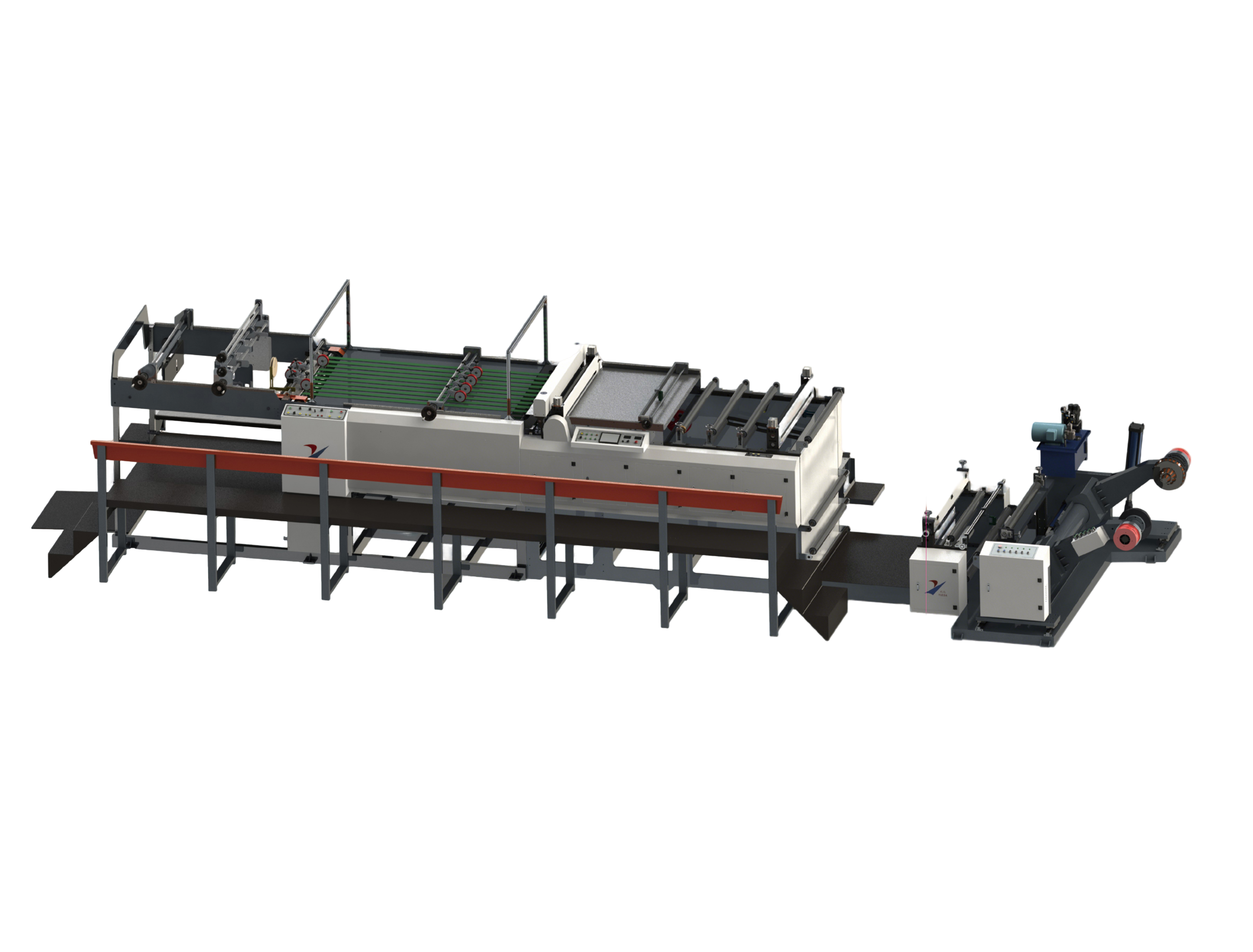
A gold and silver card laminating machine is an essential piece of equipment in modern packaging and printing workflows, especially when premium visual presentation, product differentiation, and protective finishing are required. In a packaging production line, this machine is used to apply metallic film or laminated layers onto paperboard, cardboard, specialty paper, and other substrate materials to create a high-value surface effect. The result is a stronger, more attractive, and more marketable packaging product that stands out on shelves and supports brand positioning.
As competition in retail, cosmetics, food, gift, electronics, wine, luxury goods, and promotional packaging continues to increase, the demand for premium finishing has grown rapidly. A gold and silver card laminating machine helps packaging manufacturers achieve this by integrating metallic lamination into the production process. Whether the goal is to produce gold card sheets, silver card sheets, decorative cartons, laminated labels, or display packaging, this machine plays a key role in improving both appearance and durability.
In this article, we will explain what a gold and silver card laminating machine is, how it works inside a packaging production line, what advantages it offers, typical technical specifications, common applications, material requirements, workflow integration, and important purchasing considerations. This content is written for search visibility and industry education, making it suitable for blog posts, catalog pages, industrial product pages, and packaging equipment directories.
A gold and silver card laminating machine is a specialized laminating system designed to bond metallic film or laminated surface layers onto card-based materials. These machines are commonly used to produce visually striking packaging materials with gold, silver, or other metallic effects. The laminating process can enhance both decorative performance and functional performance, such as surface protection, water resistance, scratch resistance, and improved rigidity.
In packaging and printing industries, “gold card” and “silver card” usually refer to laminated sheets or paperboards finished with metallic foil-like appearances. These materials are widely used in premium packaging because they create a luxury look while still being compatible with downstream converting processes such as cutting, die cutting, embossing, folding, and gluing.
Depending on the machine design, the laminating process may involve thermal lamination, wet lamination, adhesive lamination, or film lamination. Some systems are optimized for sheet-fed production, while others support roll-to-sheet or continuous conversion lines. In each case, the machine contributes to a packaging production line by adding a finishing stage that upgrades ordinary substrate materials into premium packaging products.
Packaging is no longer only about containment and protection. It is also about brand communication, shelf impact, tactile appeal, and perceived value. Gold and silver card lamination helps packaging brands achieve all of these goals at once. Metallic surfaces are associated with luxury, quality, celebration, elegance, and exclusivity, making them especially effective in markets where presentation strongly influences purchasing decisions.
From an operational perspective, lamination also improves the physical performance of the printed card. It can reduce surface wear, improve moisture resistance, protect printed graphics, and make cartons or cards more durable during handling, shipping, and retail display. This means packaging suppliers can combine aesthetic enhancement with practical protection in a single process.
For manufacturers, the value of a gold and silver card laminating machine lies in its ability to support high-volume production while maintaining consistent surface quality. This consistency is important when packaging must match exact brand colors, surface gloss levels, metallic reflectivity, and finish uniformity across large production runs.
In a packaging production line, the gold and silver card laminating machine is typically positioned after printing and before cutting, die cutting, creasing, folding, or box-making operations. In many production workflows, the printed sheet enters the laminating stage once the graphics, logos, and text have already been applied. The machine then overlays the metallic or protective film onto the printed substrate, creating the final decorative or semi-finished material for downstream converting.
The lamination stage serves as a bridge between printing and finishing. It transforms a printed sheet into a premium packaging material ready for box production, label production, gift card production, or display board manufacturing. Because the laminated surface can affect feeding, stacking, cutting, and gluing behavior, the machine must be integrated carefully into the line to maintain efficiency and quality.
In a typical packaging line, the sequence may look like this:
Because the laminating process affects the final visual and physical quality of the package, it must be synchronized with printing speed, sheet size, and material characteristics. A well-matched gold and silver card laminating machine can increase line productivity, reduce defect rates, and support a smoother end-to-end workflow.
The primary function of this machine is to laminate metallic film or coated layers onto a card substrate. However, within a production line, it performs several related functions that affect both product quality and manufacturing efficiency.
| Function | Description | Production Benefit |
|---|---|---|
| Surface Lamination | Bonds metallic or protective film onto paperboard or card material | Enhances appearance and surface protection |
| Decorative Finishing | Creates gold, silver, or reflective visual effects | Improves shelf appeal and brand image |
| Protection Enhancement | Adds resistance against moisture, abrasion, and smudging | Extends packaging durability |
| Material Strengthening | Improves rigidity and surface stability in some applications | Supports better converting and handling |
| Process Integration | Works as part of a continuous printing and finishing line | Improves throughput and reduces manual handling |
The exact workflow depends on the product type, machine configuration, and substrate format. However, most packaging production lines that use metallic lamination follow a similar logic: print first, laminate second, and convert last. This sequence helps preserve print quality and ensures the final product can be processed efficiently in subsequent steps.
The substrate is first printed with product graphics, decorative designs, barcodes, brand logos, or legal information. Printing must be completed with accurate registration so that the laminated finish aligns with the design. Common printing methods include offset printing, digital printing, gravure printing, and flexographic printing.
Before lamination, inks need adequate drying or curing. If the printed surface is still wet or unstable, lamination defects such as bubbling, wrinkling, poor bonding, or surface distortion can occur. Proper drying improves adhesion and protects the visual quality of the final laminated sheet.
The gold and silver card laminating machine applies the metallic film or laminate layer onto the substrate. Pressure, heat, adhesive, or a combination of these elements may be used depending on the process type. The result is a premium metallic finish that supports both decoration and protection.
After lamination, the material may require cooling or settling time to stabilize the adhesive bond and prevent deformation. This step is especially important in high-speed production lines where sheets move quickly from one process to another.
Surface inspection ensures that the laminated sheets meet quality requirements for gloss, adhesion, alignment, and defect control. Common checks include edge consistency, wrinkle detection, bubble control, and metallic effect uniformity.
The laminated material can then be slit, cut, die cut, embossed, folded, or glued according to the final packaging format. This stage turns laminated sheets into cartons, sleeves, display cards, tags, inserts, or other packaging products.
A gold and silver card laminating machine offers a wide range of benefits for packaging manufacturers, printers, converters, and brand owners. These advantages support both visual branding and production efficiency.
| Advantage | How It Helps Packaging Production |
|---|---|
| Premium Appearance | Creates metallic gold and silver effects that increase product value and visual impact |
| Better Shelf Appeal | Attracts consumer attention in competitive retail environments |
| Enhanced Durability | Protects printed surfaces from scratches, stains, and moisture exposure |
| Higher Brand Perception | Supports luxury, festive, and high-end brand positioning |
| Improved Consistency | Maintains uniform lamination quality across large production batches |
| Production Integration | Fits naturally into print-finishing-converting workflows |
| Versatile Applications | Suitable for cartons, cards, covers, labels, inserts, and decorative packaging |
| Higher Added Value | Allows manufacturers to offer premium products with stronger market pricing potential |
These benefits make the machine especially valuable for packaging lines that serve cosmetics, confectionery, wine, jewelry, gifting, promotional items, and seasonal products. In these markets, the packaging itself often plays a major role in the purchase decision, so a metallic finish can directly influence commercial performance.
Gold and silver card laminating machines can work with a variety of base materials and film types. Compatibility depends on machine design, adhesive system, heating method, and target application. The most common substrates include coated paperboard, gray board, white board, duplex board, art paper, specialty card stock, and other printable packaging materials.
| Material Type | Typical Use | Notes |
|---|---|---|
| Paperboard | Cartons, boxes, display packaging | Commonly used for premium folding cartons |
| Card Stock | Tags, cards, inserts, sleeves | Suitable for decorative and promotional packaging |
| Coated Paper | Labels, covers, printed inserts | Provides smooth lamination and strong visual finish |
| Specialty Paper | Gift packaging, luxury packaging | May require specific temperature or pressure settings |
| Metallic Film | Gold or silver surface effect | Creates reflective premium appearance |
| PET / BOPP Lamination Film | Protective finishing | Often used for gloss, matte, or metallic-style finishes |
The quality of lamination depends on the compatibility between substrate and film. Smooth surfaces, stable moisture content, and proper surface tension usually produce better adhesion and a more attractive final result. Packaging manufacturers often test multiple material combinations to determine the most efficient and cost-effective production setup.
The specifications of a gold and silver card laminating machine vary widely depending on automation level, line speed, and substrate size. The following table presents general industry reference specifications commonly associated with such equipment.
| Specification | Typical Range | Industry Meaning |
|---|---|---|
| Maximum Sheet Size | Medium to large format, depending on model | Determines the size of packaging sheets that can be laminated |
| Minimum Sheet Size | Small format capability available on some systems | Useful for cards, labels, and smaller packaging pieces |
| Production Speed | Moderate to high-speed range | Impacts line throughput and output capacity |
| Lamination Type | Thermal, wet, adhesive, or film lamination | Defines how the metallic layer is applied |
| Temperature Control | Adjustable | Supports proper bonding and material compatibility |
| Pressure System | Mechanical or pneumatic | Helps ensure strong adhesion and uniform surface contact |
| Material Thickness Range | Light card to heavy paperboard | Determines substrate flexibility |
| Automation Level | Semi-automatic or fully automatic | Influences labor demand and line efficiency |
| Power Requirement | Machine-dependent | Important for installation planning |
| Control System | Manual, digital, or PLC-based | Supports parameter adjustment and operational precision |
Buyers should always verify actual specifications based on production needs. The right configuration depends on sheet size, output volume, film type, printing method, and downstream converting process. In many packaging plants, line matching is more important than maximum speed alone.
There are several machine types used for metallic card lamination in packaging production. Each design serves different production scales and finishing requirements.
| Machine Type | Main Feature | Best For |
|---|---|---|
| Thermal Laminating Machine | Uses heat and pressure to bond the film | Stable, high-quality metallic finishes |
| Wet Laminating Machine | Uses adhesive before film application | Large-area lamination and certain specialty substrates |
| Dry Laminating Machine | Uses pre-coated adhesive films | Efficient continuous production |
| Sheet-Fed Laminating Machine | Processes individual sheets | Packaging cartons, cards, and premium printed sheets |
| Roll-to-Roll Laminating Machine | Processes material in roll format | Labels, flexible packaging, and continuous output |
| Fully Automatic Laminating Line | Integrated feeding, laminating, and stacking | High-volume industrial production |
The most suitable machine type depends on the production goal. For packaging cartons and decorative paperboard, sheet-fed or automatic systems are often preferred. For continuous packaging or label production, roll-to-roll systems may be more efficient.
Gold and silver card laminating machines are used across a broad range of packaging and printing applications. These applications typically require an attractive premium surface combined with reliable process performance.
These applications show that metallic lamination is not limited to decorative purposes alone. It can also support functional packaging requirements by improving surface resistance, handling quality, and final presentation.
To achieve consistent gold and silver card lamination results, manufacturers must control several quality variables. Even a high-performance machine may produce poor results if the substrate, film, adhesive, or process settings are not properly matched.
| Quality Factor | Importance |
|---|---|
| Substrate Flatness | Prevents wrinkling, bubbles, and registration errors |
| Ink Dryness | Ensures stable bonding and avoids surface defects |
| Film Quality | Affects gloss, reflection, and bonding performance |
| Adhesive Uniformity | Supports consistent lamination across the sheet |
| Temperature Accuracy | Important for heat-sensitive materials |
| Pressure Balance | Helps achieve strong and even surface contact |
| Line Speed Stability | Reduces defects and supports uniform output |
| Environmental Conditions | Humidity and temperature can affect paper and film behavior |
Good quality control is essential in premium packaging production because defects in metallic lamination are highly visible. Poorly laminated sheets can reduce brand value and increase waste. For this reason, many manufacturers use inspection procedures at multiple stages of the line.
When adding a gold and silver card laminating machine to an existing packaging production line, manufacturers should evaluate layout, feeding method, downstream compatibility, operator workflow, and maintenance access. The machine must match the line’s speed and product type to avoid bottlenecks or idle time.
Important integration factors include:
A well-integrated machine reduces handling errors and improves overall efficiency. It also supports faster changeovers when production must switch between packaging styles, materials, or metallic effect requirements.
Regular maintenance is critical for keeping a gold and silver card laminating machine in stable working condition. Because lamination quality depends on precision, even minor mechanical or thermal inconsistencies can lead to visible defects.
| Maintenance Task | Purpose |
|---|---|
| Roller Cleaning | Prevents adhesive buildup and surface contamination |
| Temperature Calibration | Maintains consistent bonding performance |
| Pressure Adjustment | Ensures uniform adhesion across the sheet |
| Film Path Inspection | Reduces feeding errors and film misalignment |
| Electrical Check | Supports safe and reliable machine operation |
| Lubrication of Moving Parts | Improves machine lifespan and reduces wear |
| Sensor and Control Review | Maintains automation accuracy and line stability |
Operators should also monitor film tension, substrate moisture content, adhesive flow, and output stacking quality. Preventive maintenance is usually more cost-effective than emergency repair, especially in high-volume packaging plants.
For content optimization and search visibility, the following keyword themes are commonly associated with this topic:
Using these keywords naturally in headings, body text, image alt text, metadata, and internal links can help improve relevance for search engines. However, the most important factor remains useful, original, and well-structured content that answers user intent clearly.
A gold and silver card laminating machine is an important part of a modern packaging production line because it combines decorative enhancement with functional surface protection. By integrating metallic lamination into the print-finishing workflow, manufacturers can produce premium packaging materials that offer stronger shelf appeal, better durability, and higher perceived value.
Whether used for folding cartons, luxury boxes, promotional cards, labels, or specialty packaging, this machine supports efficient production and consistent quality. Its role in the packaging line is both practical and strategic: it upgrades ordinary printed substrates into premium laminated products while improving production competitiveness in demanding markets.
For packaging companies, printers, and converters seeking to expand into high-value product categories, understanding how a gold and silver card laminating machine fits into the production line is an essential step toward better planning, improved output, and stronger market positioning.
Contact: Peter Chen/Jack Chen
Mail : peterchen@yuedamachine.com
Cellphone: +86 18767458866/ +86 19857780001
Address: Building 2, No. 1333 Times Avenue, Longgang City,Wenzhou City, Zhejiang Province China
Copyright © 2026 Wenzhou Yueda Packaging Machinery Co., Ltd. All Rights Reserved.
SitemapThis website uses cookies to ensure you get the best experience on our website.
 Español
 Portugues
 Indonesia
 Tiếng Việt



 Phone
 E-mail
Comment
(0)